By Renovo Path Team · · 7 min read · Practices
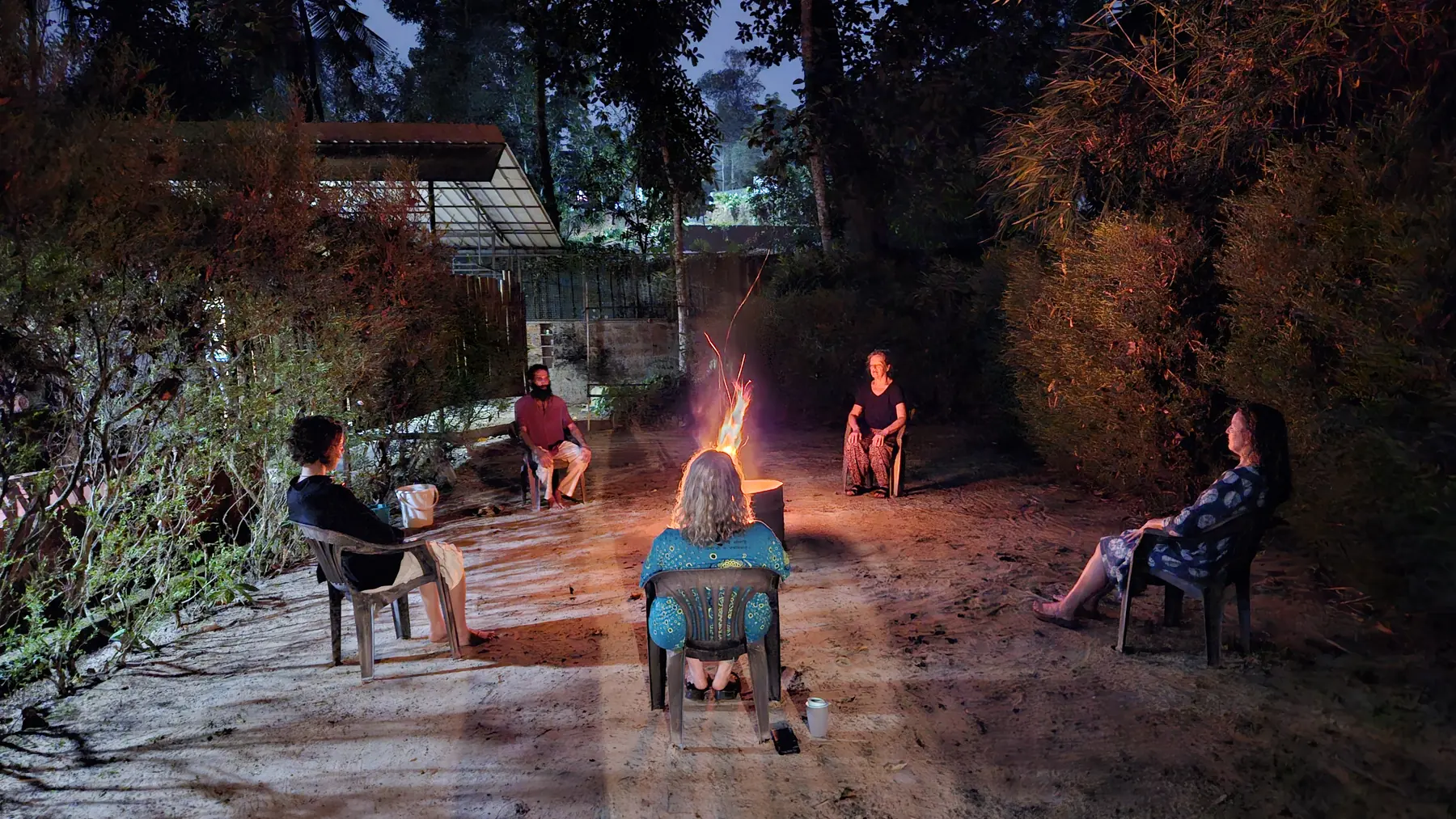
A peer circle is a small group in which each person speaks honestly while the others listen without advising, fixing or judging. Many people find that hearing their own private predicament in someone else's words is the most useful part of a retreat.
How a circle is held
- A small group, seated so everyone can see everyone
- One person speaks at a time, for as long as they need
- Listeners do not interrupt, advise or compare
- A facilitator holds the time and the tone
- Confidentiality: what is shared in the circle remains in the circle
Why no advice?
Advice is usually a way of ending discomfort, ours or theirs. Being heard without being fixed is rarer than it sounds, and it lets people hear themselves.
Why it works for accomplished people
Successful people are often the person others come to for answers. Few places let them be unsure out loud. A circle makes uncertainty ordinary, and that alone can lift a great deal of private weight.
What if I do not want to share?
You decide how much you say. Listening is participation too. Most people speak more than they expected once the room feels trustworthy.
The confidentiality covenant
Confidentiality is a shared agreement honoured by every participant. It is the foundation of the container, and it is why the circle can be honest.
What good listening looks like
In a circle, listening means giving full attention without preparing your reply, staying with what is said, and resisting the urge to fix or relate it to your own story. It is a skill, and it feels unusual at first. Most people find it restful once they trust the room.
A typical circle, step by step
- The facilitator opens with a moment of quiet and a reminder of the agreements, including confidentiality.
- A simple prompt is offered, for example, 'What brought you here?'
- Each person speaks in turn, for as long as they need, and no one responds in between.
- After everyone has spoken, there is a short pause, and then an open space for reflection, not advice.
- The circle closes with a few words from each person and a moment of silence.
Common difficulties
Some people feel exposed when they speak, others feel impatient when they listen, and a few find the silence between speakers uncomfortable. These reactions are information, and facilitators expect them. You can say 'pass', you can ask for a pause, and you can tell the facilitator afterwards what came up.
Why it stays with people
Hearing others describe a private feeling in their own words often reframes your own. Many people say the quiet relief of recognising themselves in a stranger's story is what they remember longest, more than any technique.
Agreements that make a circle safe
- Confidentiality: what is said stays in the circle
- No advice, fixing or interrupting
- Speak from your own experience with 'I', not 'you'
- You may pass at any time
- Take care of yourself, and tell the facilitator if you need support
Key takeaways
- A circle is honest speaking and honest listening, held by a facilitator
- It is not therapy, and it is not a debate
- Many people find comfort in discovering their predicament is common
- You decide how much to share
What it is like to listen without answering
Listening without planning a reply is harder than it sounds. Notice the pull to relate, to reassure or to compare. When you feel it, take a breath and return to the speaker's words. Over a session, many people discover that their attention deepens, and that they hear things they would normally miss: a pause, a change in tone, a word chosen carefully.
Speakers often feel the difference. Being heard fully, without interruption, can be rare. It can help people say things they have not said before, and it models a kind of listening that they can take home to their families and workplaces.
A circle in the context of a four-day retreat
Over four days, circles usually evolve. On the first day, people tend to speak about who they are and why they came. As trust builds, the conversation deepens, and by the third day many people are sharing things they have not said aloud before. In the final circle, the focus often turns to what people are taking home and what they intend to do.
Because the same group meets several times, you come to know each person a little. You hear how someone's thinking shifts, and they hear yours. Many people say that this unfolding, more than any single session, was what made the circles valuable.
If something hard comes up
Occasionally someone becomes upset in a circle. The facilitator pauses, offers a moment of quiet, and checks in with the person, in the circle or privately. Others are asked to hold their own responses and not to rush in. The aim is to let feelings be present without turning the circle into therapy or leaving anyone alone with them.
If you find yourself overwhelmed, you can step out, take a break or speak to a facilitator. Looking after yourself is part of taking part, and no one will judge you for it.
The history behind circles
Gathering in a circle to talk and listen is very old. Many cultures have traditions of sitting together to share stories, settle disputes or make decisions, with everyone able to see everyone. The form works because it is simple: no one sits at the head, and no one is hidden at the back.
In modern settings, circles have been used in schools, communities, workplaces and retreats to build trust and give everyone a voice. A retreat circle borrows this simplicity and adds clear agreements: confidentiality, speaking from your own experience and listening without advising. Together they make a space that is both ordinary and unusual.
How circles differ from group therapy and from a meeting
A circle is not group therapy. Therapy groups are led by trained clinicians to address mental-health difficulties over a period of time. A circle is a facilitated conversation among peers, held for a short time, with the aim of being heard and hearing others. It does not diagnose or treat, and a good facilitator is clear about that.
It is also not a meeting. There is no agenda to get through, no decision to reach and no one to persuade. The pace is slow, silences are allowed and what matters is how you speak and listen. People often say that this is the biggest difference from the conversations in their working lives.
How to prepare for your first circle
Many people find that the anticipation is worse than the experience. Within a few minutes of the first person speaking, the room usually settles, and the circle begins to do its quiet work.
- Rest well, since honest speaking is harder when you are tired
- Decide in advance how much you are willing to share, and remember you can pass
- Bring curiosity about others, not only about yourself
- Notice and let go of the urge to give advice
- Remember the agreement: what is said here stays here
What to take away
A peer circle is a simple form with a quiet power: people speak honestly, others listen without fixing and what is said stays in the room. Many people find that being heard, and hearing others, changes how they see their own lives. If you take part in one, come with openness, look after yourself and let the circle do its gentle work.
Common questions
Do I have to speak in the circle?
You choose how much you say. Listening is part of taking part.
Who is in the group?
People who have applied and been accepted, in a small group, all in a similar life stage and with similar questions.
Is it like group therapy?
No. A circle is a structured practice of honest speaking and listening, and it is not therapy. A facilitator holds it, and referrals are offered when someone needs therapeutic support.
Keep reading
If this sounds familiar, the Silent Gap explains the pattern, and the free Silent Gap guide gives you six questions to sit with. The next Renovo Path retreat is in Kochi, Kerala, on 24–27 December 2026, by application.