By Renovo Path Team · · 15 min read · Silence
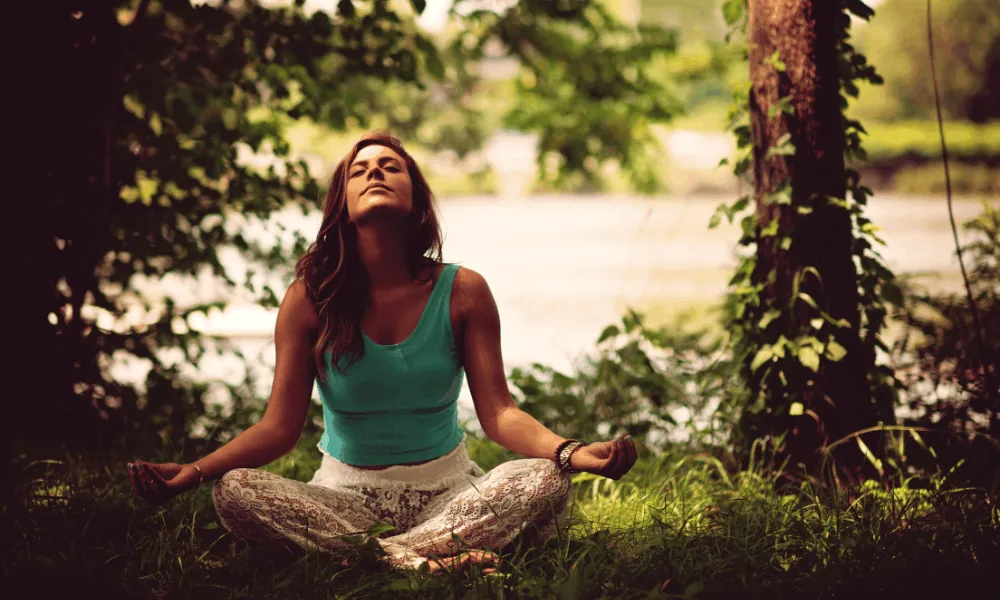
Vipassana is a form of meditation that trains you to observe your own experience, body sensations, feelings and thoughts, as it actually is, moment by moment, and to see how it arises and passes away. The word is Pali, the language of early Buddhist texts, and is usually translated as insight or clear seeing. It is one of the oldest meditation methods still practised, and one of the most widely taught in intensive, silent courses.
This guide explains what Vipassana is, how it differs from other kinds of meditation, the main traditions that teach it, what a ten-day course involves, what research and experience suggest about its effects and risks, and how to decide whether it suits you. It is written for curious, practical readers, not for followers of any one tradition.
What does Vipassana mean?
Vipassana comes from the Pali words vi, often rendered as 'in various ways' or 'through', and passana, 'seeing'. Together they are commonly translated as 'insight' or 'seeing clearly'. In the Buddhist tradition, Vipassana refers to a kind of direct, experiential understanding of how mind and body work, in particular of impermanence, unsatisfactoriness and the absence of a fixed self in experience.
In everyday modern use, the word names a family of meditation methods, usually taught as a progression of attention: first steadying the mind, then observing sensations and mental events with careful, non-reactive awareness. You do not need to hold any belief to try the practice, though it comes from a religious context and many teachers present it with its philosophy.
A brief history
Early Buddhist texts describe a set of practices for developing both calm and insight. Calm practices (samatha) settle and unify the mind, and insight practices (vipassana) examine experience closely. A central text, the Satipatthana Sutta, describes four 'foundations of mindfulness': the body, feelings, states of mind and mental objects. Much of what is taught today as Vipassana draws on this teaching.
In the Theravada countries, particularly Myanmar, Sri Lanka and Thailand, teachers developed distinct methods. In the twentieth century, lay teachers and monks began teaching Vipassana to wider audiences, including people outside Buddhist communities. This revival, from teachers in Burma and elsewhere, is the origin of most modern courses, and of many of the secular mindfulness programmes taught today.
Samatha and Vipassana: calm and insight
Many teachers distinguish two complementary aims. Samatha develops concentration: you rest attention on one object, such as the breath, until the mind becomes still. Vipassana develops insight: you observe changing experience, with less emphasis on a single object and more on noticing how things arise and pass. In practice the two overlap, and most courses begin with some calming practice before turning to observation.
A helpful comparison is a camera. Samatha steadies the camera so the image is sharp. Vipassana points it at what is actually in front of you, and keeps looking. A steady, sharp camera is useful, but the aim of insight practice is to look closely and honestly, not only to rest in stillness.
How Vipassana is practised
The details vary between traditions, but the core is simple. You sit, usually with your back upright and your eyes closed, and you bring attention to a chosen anchor, often the breath at the nostrils or the abdomen, or the sensations of the body. When the mind wanders, you note that it has, and return. As attention steadies, you widen your awareness to include sensations, feelings and thoughts as they arise, observing them without trying to hold on to what is pleasant or push away what is unpleasant.
A central instruction is equanimity: not reacting with craving or aversion to what you notice. Pain in the knee, a restless thought or a flash of joy is observed in the same way. Over time, many practitioners report that they see more clearly how much of their suffering comes from their reactions rather than from sensations themselves.
The main traditions that teach it
The methods differ in how they direct attention and how strict the surrounding rules are, so it is worth reading about a tradition before attending its retreats.
- The Mahasi tradition (from Myanmar): uses the rising and falling of the abdomen as a primary object, and 'noting' mental labels such as 'rising', 'falling', 'thinking' and 'hearing'
- The Goenka tradition (from Sayagyi U Ba Khin through S. N. Goenka): teaches a ten-day residential course in noble silence, beginning with breath awareness and moving on to a systematic scan of bodily sensations, with courses offered worldwide on a donation basis
- The Thai Forest tradition: emphasises simple living, close attention to body and mind, and a close relationship with a teacher
- Western insight meditation centres: teach Vipassana in secular or lightly Buddhist forms, often with a mix of silent retreats and talks
- Secular mindfulness programmes: adapt elements, such as body scans and open awareness, into short courses
What a ten-day Vipassana course looks like
A typical ten-day residential course is run in a quiet centre and asks participants to observe noble silence, which means not speaking, gesturing or making eye contact with other students, for most of the course. Participants usually follow a strict daily schedule that starts early in the morning and includes many hours of seated meditation, with breaks for meals, rest and a short evening talk. Phones, reading, writing and other entertainment are generally set aside.
Courses of this kind are often offered free of charge, with costs covered by donations from past participants, and are staffed by volunteers. Practical details differ from centre to centre, so check the rules, schedule and expectations carefully before applying. The structure is demanding by design, and the format is not suited to everyone.
A sample day, in broad strokes
The schedule is intended to remove distractions so that attention can be turned inwards. Many participants find the first few days hard, as the body aches and the mind races, and the later days calmer, though experiences vary widely.
- Early morning: a wake-up bell, then a first sitting before breakfast.
- Morning: several periods of sitting and walking, with a rest and a simple meal.
- Afternoon: more sitting, with group sittings and, at times, individual check-ins with a teacher.
- Evening: a final group sitting and a recorded or live talk that explains the method.
- Night: early sleep, usually before ten.
What many practitioners report
People who attend courses and practise afterwards often describe greater awareness of their reactions, more patience, a different relationship to pain and the ability to pause before responding. Some report moments of deep calm, others describe strong emotions or memories surfacing. A few describe little change, and others find the experience too intense.
These are reports, not guarantees. Personal accounts are valuable but they are not a substitute for research, and they should be read with care. The practice is a skill, and its effects tend to depend on how much you practise, how you approach it and what else is happening in your life.
What research suggests
There is a sizeable body of research on mindfulness-based programmes, which draw on Vipassana-style practices, and it generally suggests benefits for stress, anxiety and some aspects of wellbeing, with variation in how large the effects are. Research on long, silent Vipassana retreats specifically is smaller, and it includes small studies and surveys, which limits the conclusions that can be drawn.
Researchers have also begun to document challenging experiences linked to intensive meditation, from anxiety and distressing memories to dissociation, particularly in people with prior vulnerability. Not everyone is affected, and it is not clear how common serious problems are, but they are real enough that responsible teachers talk about them and screen participants.
Risks and who should take care
A responsible centre asks about health on its application form, and encourages you to answer honestly. If a centre does not, or discourages questions, consider another.
- People with a history of trauma, psychosis, severe depression or anxiety disorders should speak to a doctor or therapist before attending an intensive retreat, and consider a gentler format
- Those taking medication for a mental-health condition should not stop it, and should tell the organisers
- People who are in acute distress, in active addiction or recently bereaved may be better served by support, rather than an intensive silent course
- Anyone with physical conditions that make long sitting hard, such as back or knee problems, heart conditions or pregnancy, should check first and ask about adjustments
Vipassana and mindfulness: how they relate
Mindfulness-based stress reduction (MBSR), created in the late 1970s by Jon Kabat-Zinn, and similar programmes draw on Vipassana practices such as body scans and open awareness, presented in a secular form and over eight weeks. They are shorter, less demanding and do not require silence or retreat.
In this sense, mindfulness programmes can be thought of as an accessible way into insight practice, while traditional Vipassana courses are a deeper, more immersive route. Many people begin with an eight-week course or a daily practice and later try a retreat, if they wish.
How Vipassana differs from other meditation types
- From mantra meditation: Vipassana does not use a repeated word, but observes what arises
- From guided meditation: it is usually unguided after instructions, with practice done in silence
- From loving-kindness: it focuses on seeing experience clearly, not on cultivating a particular feeling
- From movement-based practice: it is traditionally seated and walking, though it can include simple movement
- From Renovo Path's approach: it is quieter and more solitary, whereas a somatic retreat uses guided practice, play, circles and conversation
How to start without a ten-day commitment
Starting gradually lets you find out whether the practice suits you, and gives you tools to handle difficulty if it arises on a longer retreat.
- Practise five to ten minutes of breath awareness each day for several weeks.
- Add a body scan twice a week, noticing sensations without trying to change them.
- Try walking meditation, paying attention to each step.
- Take an eight-week mindfulness course or join a local sitting group.
- Read about the traditions, and talk to people who have attended courses.
- If you feel drawn to a retreat, begin with a shorter one, or a weekend.
Preparing for a Vipassana course
Read the rules and the schedule, and ask yourself honestly whether you can follow them. Arrange time off and cover for responsibilities, tell people close to you that you will be out of contact, and plan travel so that you arrive rested. Pack light, comfortable clothes and any permitted items, and avoid arriving exhausted or after a late night.
Be realistic about your expectations. The aim of a course is to learn a method of observing your experience, not to have a particular experience. Many people find it helpful to go with an attitude of curiosity and patience, and to treat difficulties as part of the work.
What to do if it gets hard
Almost everyone finds some part of a long retreat difficult: physical pain, boredom, restlessness, doubt, sadness or anger. Teachers generally encourage you to observe these experiences without acting on them, and many people find that they change or pass. If something feels overwhelming rather than merely uncomfortable, speak to a teacher or staff member. You are free to ask for support, to rest or to leave.
If you leave a retreat early, you are not a failure. It can be a wise decision to protect yourself. Afterwards, talk to someone you trust, and consider speaking to a health professional if you feel unsettled.
Integrating practice into daily life
Insight is not meant to stay in the meditation hall. After a retreat, many practitioners try to keep a daily sitting practice, even for ten or twenty minutes, and bring the same attention to ordinary activities: eating, walking, listening. The test of the practice is how you respond when things are not calm.
Support helps. Find a local group, a teacher or a friend with whom to practise, and be patient with the difficulty of returning to a busy life. The first weeks are often the most delicate, and a gentle return is wise.
Common myths about Vipassana
- Myth: it is only for Buddhists. Fact: many people of all beliefs practise it, though it comes from a Buddhist context
- Myth: you must stop thinking. Fact: you observe thoughts, you do not eliminate them
- Myth: it will make you calm all the time. Fact: it can bring up difficult material as well as ease
- Myth: more silence is always better. Fact: intensity suits some people and harms others
- Myth: it is a medical treatment. Fact: it is a meditation practice, not a cure for any condition
Is Vipassana right for you?
Vipassana may suit you if you are curious about your own mind, can tolerate stillness and are reasonably well supported and stable. It may be less suitable if you are going through a crisis, struggling with severe anxiety or trauma, or looking for company and conversation. Different people need different formats, and there is no hierarchy of better and worse practices.
If you are unsure, begin with something gentler, such as a short guided retreat that includes quiet time, or a daily practice at home, and notice how you respond. You can always deepen later, and starting gently is often the wiser path.
How a guided somatic retreat differs
A guided retreat such as Renovo Path's mixes somatic practice, games and theatre, peer circles, reflection and rest, with silence used in small pieces rather than for days on end. It suits people who want company, structure and support as they look at their lives, and who may find long silence too demanding. It is not a Vipassana course and does not claim to be one.
Both formats value attention and honesty. They differ in pace, social setting and emphasis. If you are drawn to the quiet, solitary route, a Vipassana course may be worth considering. If you want a gentler, more conversational path, a guided retreat may fit better.
The five hindrances in Buddhist teaching
Buddhist teaching describes five hindrances that commonly obstruct meditation: sensory desire, ill will, sloth and torpor, restlessness and worry, and doubt. Many students find the list a helpful map, because it names experiences that otherwise feel like personal failures. Craving a pleasant state, irritation with noise, heavy sleepiness, a racing mind and the thought 'this is pointless' are all ordinary.
The suggested response is not to fight them but to recognise each one, name it and observe how it arises and passes. A restless mind becomes an object of attention rather than an enemy. Over time, many practitioners find that simply knowing 'this is restlessness' changes their relationship to it.
The noting technique
Some traditions, notably the Mahasi method, use mental noting. As the abdomen rises and falls, you silently note 'rising', 'falling'. When a thought arises, you note 'thinking'; when a sound is heard, 'hearing'; when the knee hurts, 'pain'. The labels are brief, and the aim is bare recognition, without commentary.
Noting can help steady attention and make it easier to observe without being swept away. Some people find it clarifying, while others find it mechanical, and prefer approaches that use sensations alone. Neither is better, and trying both can show which suits you.
How to evaluate a teacher or centre
A centre that is open about its approach and its limits is easier to trust. Remember that long silent retreats can be intense, and that choosing a reputable one matters.
- Look for clear information about the tradition, the schedule and the rules
- Check that health screening is taken seriously, and that there is a way to speak to a teacher during the course
- Notice whether questions are welcome, and whether there are clear arrangements for leaving early
- Be wary of claims of special powers, pressure to donate or secrecy about methods
- Ask previous participants about their experience, and read widely before committing
Known centres and finding one in India
India has many Vipassana centres, including the well-known international centre at Igatpuri in Maharashtra, as well as meditation centres in the Himalayan foothills, in Bodh Gaya, Bengaluru and elsewhere, offering courses in different traditions. The details, schedules and requirements differ, so check each centre's current information directly.
If you are travelling for a course, plan your journey carefully, allow a few days of rest before and after, and tell someone where you will be. Remember that most courses ask you to leave phones and devices with staff, so arrange your affairs in advance.
A short reading and listening list
If you would like to read more, look for introductory books and talks by established teachers from the traditions mentioned above, and compare more than one voice. Sources from the Mahasi, Goenka, Thai Forest and Western insight traditions differ in emphasis, and reading across them gives a rounder picture. Treat any single teacher's account as one view, and notice which approach resonates and which does not.
Be cautious of materials that promise rapid enlightenment or dramatic cures. Good introductions are modest about what the practice can do, clear about its challenges and respectful of readers who are not Buddhists.
Common questions
What does Vipassana mean?
It is a Pali word usually translated as insight or clear seeing. It names a way of meditating that observes experience as it is, from moment to moment.
Is Vipassana a religion?
It comes from Buddhist tradition, but many teachers present it as a practice that does not require belief. You can practise it without adopting a religion.
How long does a Vipassana course last?
The best-known residential courses last ten days. Shorter courses, weekend retreats and daily home practice are also common.
Is Vipassana safe?
For most people it is, but intensive retreats can bring up difficult experiences. People with trauma, severe mental illness or other health conditions should speak to a professional first.
How is it different from mindfulness?
Mindfulness programmes draw on Vipassana practices in a shorter, secular form. Traditional Vipassana courses are deeper and more demanding.
Keep reading
If this sounds familiar, the Silent Gap explains the pattern, and the free Silent Gap guide gives you six questions to sit with. The next Renovo Path retreat is in Kochi, Kerala, on 24–27 December 2026, by application.