By Renovo Path Team · · 7 min read · Practices
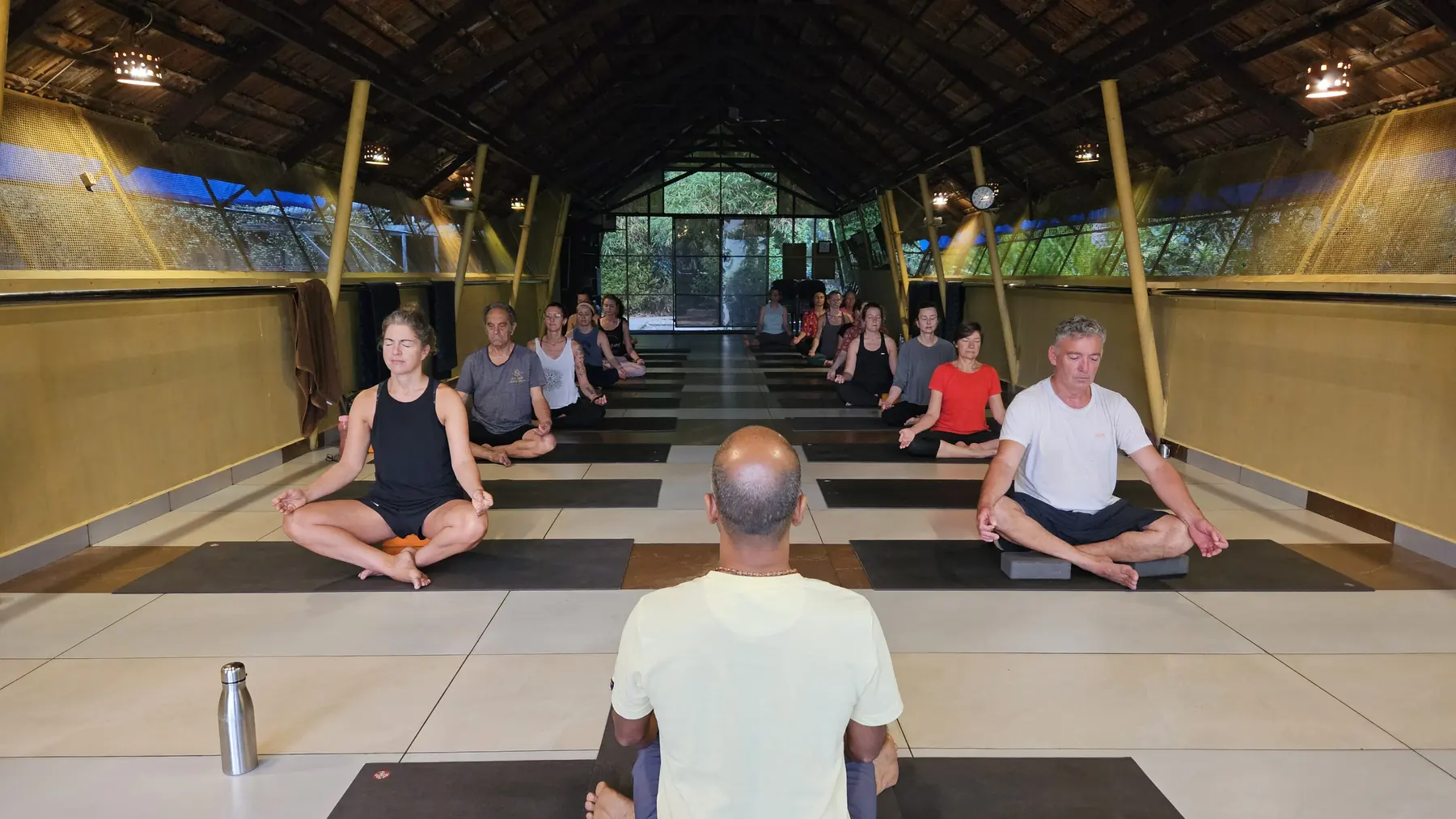
Mindfulness is the practice of paying attention, on purpose and without judging, to what is happening in the present moment: your breath, your body, your thoughts and what is around you. It is not about emptying your mind or becoming calm on command. It is about noticing what is already there.
For a busy professional it is best understood as a skill you can build in small pieces: one slow breath before a meeting, one honest look at how you are before you answer a message. This guide explains what it is, how to practise it, and what it can and cannot do.
What mindfulness is
A commonly used description is attending to the present moment deliberately, with an attitude of openness and without trying to change it. In practice that means noticing a thought as a thought, a feeling as a feeling, and a sensation as a sensation, instead of being carried off by each one.
Mindfulness has roots in contemplative traditions, and in recent decades it has been taught in secular forms, including eight-week programmes used in hospitals and workplaces. You do not need a belief system to practise it.
What mindfulness is not
- It is not blanking the mind. Thoughts will come, and noticing them is the practice
- It is not relaxation, though relaxation can be a side effect
- It is not positive thinking or acceptance of everything that is wrong
- It is not a replacement for medical or psychological treatment
Three ways to practise in a working day
Formal practice means setting aside five to twenty minutes to sit and follow your breath or your body. Informal practice means bringing the same attention to ordinary tasks: drinking tea, walking to a meeting, listening to a colleague without preparing your reply. Micro-practice means a single conscious breath at a natural pause, such as before opening your email.
Most people find a short daily formal practice, plus a few informal moments, more sustainable than a long practice they cannot keep up.
A five-minute practice to try now
- Sit comfortably, feet on the floor, and let your eyes close or rest on a point in front of you.
- Notice your breath where you feel it most clearly: the nostrils, chest or belly. Do not change it.
- When your mind wanders, which it will, notice where it went, and gently return to the breath.
- Do this for five minutes, then notice how your body feels before you open your eyes.
What research suggests
Studies on mindfulness-based programmes generally report benefits for perceived stress, attention and wellbeing, and some conditions respond better than others. The research is uneven, effects vary between people, and some early claims were overstated. It is sensible to treat mindfulness as a useful practice, not a guaranteed fix.
Who should take care
For most people, a short practice is safe. People living with trauma, severe anxiety or depression can sometimes find that sitting quietly brings up difficult feelings. If this is you, practise with an experienced teacher or health professional, keep sessions short, and stop if it becomes overwhelming.
How mindfulness connects to the body
Attention to the body is one of the most reliable doors into the present moment, because the body is always here. That is why body-based practice sits at the heart of a somatic retreat: when thinking keeps circling, sensation gives you something concrete to come back to.
Informal mindfulness in the working day
- Before replying to an email, take one breath and notice how you feel
- In a meeting, notice when you are planning your reply and return to listening
- While waiting for a lift or a call, feel your feet and stop reaching for your phone
- At lunch, taste the first three mouthfuls
A two-week starter plan
- Days one to seven: five minutes each morning following your breath.
- Days eight to fourteen: the same, plus one informal moment each day.
- At day fourteen, note what you noticed, and decide whether to extend.
Mindful leadership and relationships
People who practise often report that they interrupt less, notice their reactions sooner and feel less swept along by urgent messages. Whether this is the practice itself or the time it gives you, the habit of pausing before you respond tends to improve conversations at work and at home.
Common misunderstandings
- It is not about stopping thoughts
- It is not always relaxing
- It does not require special clothes or settings
- It is not a quick fix for a demanding job
Key takeaways
- Mindfulness is attention on purpose, without judging
- Five minutes a day is a good start
- Informal moments count too
- It helps many people, and it is not a cure
Mindfulness and difficult emotions
Mindfulness does not remove difficult emotions. What it can do is change your relationship to them. Instead of being swept along by anger or worry, you may notice it earlier, feel where it sits in the body and give yourself a moment before you act. That small pause can make a large difference to how you speak and what you decide.
If strong emotions arise during practice, you can ground yourself by feeling your feet, opening your eyes or shifting your attention to sounds in the room. If you struggle with overwhelming emotions or a history of trauma, work with a qualified teacher or therapist.
Mindfulness in meetings and conversations
A meeting is one of the best places to practise. Before it begins, take two slow breaths. During it, notice when you start planning your next comment, and come back to listening. Notice the tone of your own voice, your posture and your impulse to interrupt. These small observations build awareness without taking any extra time.
In one-to-one conversations, try listening fully for the first minute without preparing a reply. Many people find that this simple act changes the conversation, making the other person feel heard and giving you more information than you would normally collect.
Mindfulness and digital life
The aim is not to give up technology but to use it with awareness. A little noticing shows how often you reach for the phone without deciding to.
- Notice the urge to check your phone, and wait three breaths before you act on it
- Turn off non-essential notifications
- Try one hour a day without screens
- Notice how you feel after scrolling, and after a walk
- Keep your phone out of reach when you meditate or eat
How mindfulness is taught
Structured mindfulness programmes typically run for eight weeks, with weekly group sessions, daily home practice and a day of longer practice. They teach a mix of body scans, sitting meditation, gentle movement and reflective discussion. Many hospitals, universities and workplaces offer them.
If you are interested in a structured course, look for teachers with recognised training, and ask about what to expect. A good teacher will explain that the course asks for commitment, and that it is not a quick fix.
Where to begin tomorrow
Tomorrow morning, before you pick up your phone, take three slow breaths and feel your feet on the floor. That is mindfulness. At lunch, taste your first three mouthfuls. Before your next meeting, pause for one breath. These small moments, repeated, are a practice. If you want more, add five minutes of formal sitting. Keep it light, and let it grow at its own pace.
Common questions
How long should I practise each day?
Five to ten minutes is a good start. Regular short practice usually beats an occasional long one.
What if my mind never stops?
That is normal. The practice is noticing the wandering and returning, not stopping thoughts.
Is mindfulness the same as meditation?
Mindfulness is a quality of attention that can be trained through meditation. Meditation is the wider family of practices, and mindfulness meditation is one of them.
Can mindfulness help with burnout?
It can support recovery alongside rest, workload changes and professional care, but it does not fix an overloaded job.
Keep reading
If this sounds familiar, the Silent Gap explains the pattern, and the free Silent Gap guide gives you six questions to sit with. The next Renovo Path retreat is in Kochi, Kerala, on 24–27 December 2026, by application.