By Renovo Path Team · · 7 min read · Retreat
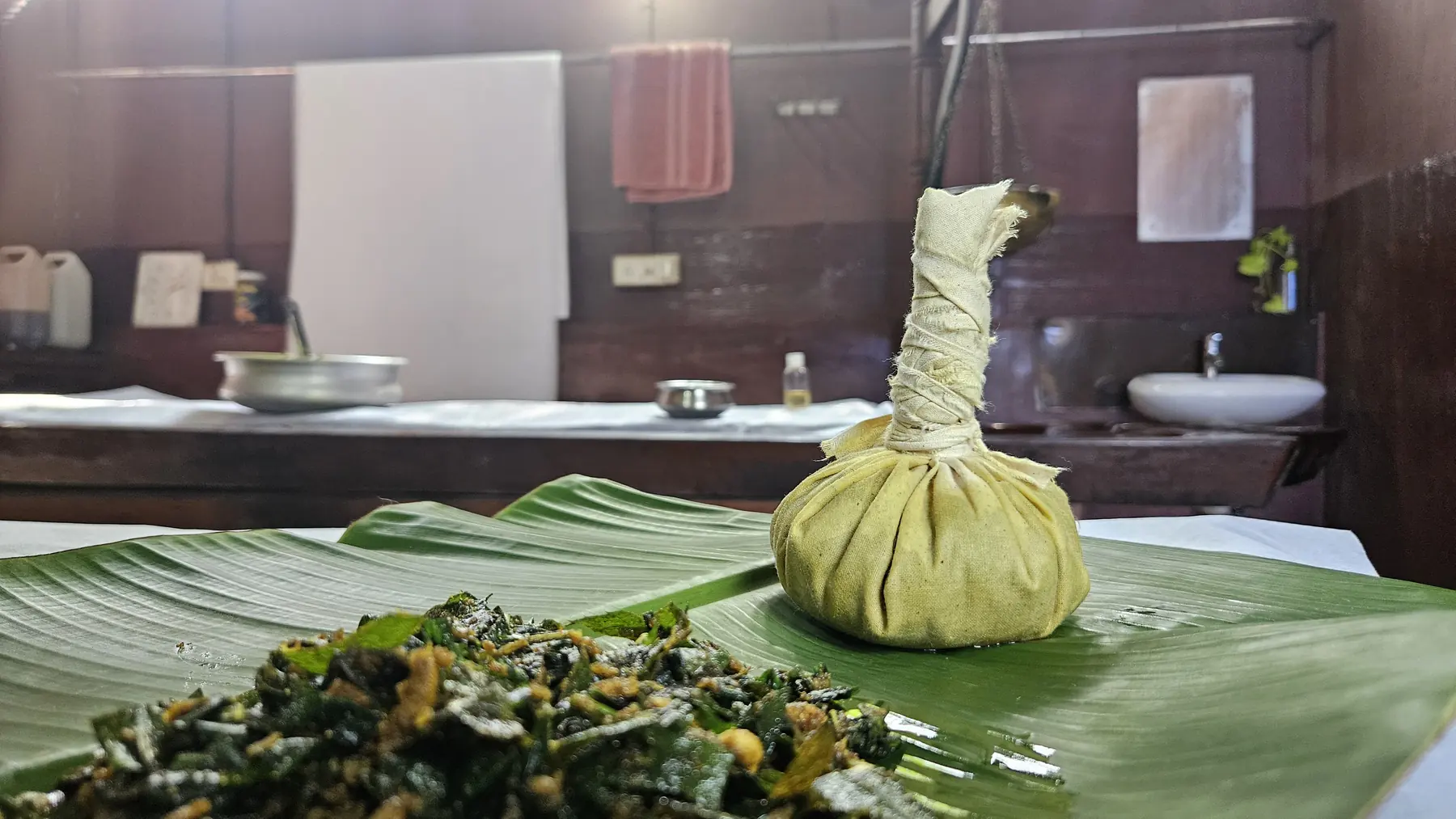
Kerala cooking is built on coconut, curry leaf, black pepper, tamarind and fresh seafood, with plenty of vegetarian dishes. First-time visitors should try appam with stew, puttu with a curry, a fish curry and a meal served on a banana leaf. If you have dietary needs, say so early. This guide covers the dishes and a few practical tips.
Breakfast
- Appam with vegetable or chicken stew: lacy rice pancakes with a mild coconut-milk stew
- Puttu with kadala curry: steamed rice and coconut cylinders with black-chickpea curry
- Idiyappam: string hoppers, often with a coconut or egg curry
- Dosa and idli with sambar, which are widely available
Main meals
- Kerala meals (rice with several curries, thoran, pickle and papad)
- Fish curry in a tangy red or coconut gravy
- Karimeen pollichathu: pearl spot fish marinated and cooked in a banana leaf, where available
- Avial: mixed vegetables in coconut and yoghurt
- Thoran: stir-fried vegetables with grated coconut
Sadya
A sadya is a traditional vegetarian feast served on a banana leaf, with many small dishes and payasam to finish. It is most associated with festivals, though some restaurants serve a version on other days.
Snacks and sweets
- Banana chips fried in coconut oil
- Unniyappam and other sweet fried snacks
- Payasam, a milk-and-jaggery or vermicelli dessert
- Tender coconut water, sold fresh on the roadside
- Filter coffee and masala tea
Vegetarian and special diets
Many Kerala dishes are vegetarian, and vegetarian restaurants are common. If you avoid meat, fish, dairy, gluten or have allergies, say so clearly. Ask your organiser what food is provided and mention your needs before you arrive.
Practical tips
- Spice levels vary. Ask for mild if you are unsure
- Drink bottled or filtered water, and be careful with raw salads and ice if you have a sensitive stomach
- Eat where it is busy, since turnover usually means fresher food
- Carry hand sanitiser, and wash hands before eating
- Keep medication on hand if you are prone to stomach trouble
How a typical day of eating might go
- Breakfast: appam with stew or puttu with kadala curry, and tea or coffee.
- Mid-morning: tender coconut water or banana chips.
- Lunch: a Kerala meal on a banana leaf, with rice, curries and thoran.
- Afternoon: tea with a fried snack.
- Dinner: a lighter meal, such as dosa, idiyappam or a fish curry, and payasam.
Questions to ask a restaurant
- Is this dish vegetarian, and is it cooked in ghee or coconut oil?
- Can the spice level be reduced?
- Does the curry contain nuts, fish or dairy?
- Is the water filtered, and is the ice made from filtered water?
If you have a sensitive stomach
Start with simple dishes, eat at busy and clean places, and avoid raw salads and unwashed fruit. Carry oral rehydration salts and any medication your doctor recommends. If you develop a fever, severe symptoms or dehydration, see a doctor.
A short vocabulary
- Appam: lacy rice pancake
- Puttu: steamed rice and coconut cylinder
- Thoran: dry vegetable stir-fry with coconut
- Avial: mixed vegetables in coconut and yoghurt
- Payasam: sweet milk or jaggery dessert
Key takeaways
- Try appam and stew, puttu and kadala, a fish curry and a banana-leaf meal
- Vegetarian options are plentiful
- Say clearly if you have allergies or restrictions
- Retreat meals are included and dietary needs can be shared early
Eating with the seasons and the coast
Kerala's geography shapes its food. The coast provides fish and prawns, the backwaters offer pearl spot and other freshwater fish, and the hills yield spices, tea and coffee. Coconut grows everywhere, and appears as milk, oil, grated flesh and water. Rice is the staple, served steamed, ground into batter or pounded into flour.
If you have the chance, try a meal where the menu depends on the day's catch, and ask what is freshest. Fish is typically cooked simply, in a spicy red curry or with a coconut gravy. In festive seasons, you may also find special sweets and snacks, such as banana chips made fresh and sweet fried dumplings, on offer in local shops.
Eating at a retreat or homestay
At a retreat or homestay, meals are often simple, home-style and based on what is local and fresh. You may be offered rice and curries, vegetable dishes with coconut, lentil preparations, pickles and a sweet to finish. Portions can be generous, and food is often served at set times.
If you have preferences or restrictions, say so in advance and again on arrival. Cooks are usually happy to adapt where they can, and appreciate knowing early. Eating mindfully, noticing flavours, textures and the effect of food on your body, is a practice in itself, and many people find meals one of the most memorable parts of a retreat.
Drinks you will meet
- Tender coconut water, sweet and refreshing, sold fresh on the roadside
- Masala tea and strong filter coffee, served hot and sweet
- Buttermilk (sambaram), a light spiced drink often served with meals
- Fresh lime soda, sweet or salted
- Herbal drinks made from dried ginger and spices, sometimes served at wellness venues
Etiquette at the table
- In many homes and restaurants, people eat with their right hand, so wash your hands first
- It is fine to ask for a spoon if you prefer one
- Take what you can finish, and ask for more rather than leaving food
- Wait until everyone is served, in a home, before beginning
- Thank the cook, and do not be shy about praising the food
Kerala food and the idea of mindful eating
Food is a good place to practise attention. Kerala meals are often served in several small portions, and eating with your hand invites you to feel texture and temperature in a way a fork rarely does. Slowing down enough to taste each dish separately is a practice in itself.
Try eating one meal a day without a phone or a book. Notice the first bite, the aroma, the way flavours change. Many people say that this simple habit makes meals more enjoyable and helps them eat more calmly. It is also a quiet way to carry a retreat's attention into everyday life.
A short guide to ordering in a restaurant
Staff in most places are happy to guide you, especially if you show interest in the food.
- Ask what is fresh today, particularly for fish and seafood
- Order a few dishes to share, so you can taste more
- Say whether you want mild, medium or spicy, and ask for chilli on the side if unsure
- Ask what a dish contains if you have allergies, including coconut and nuts
- Finish with tea or filter coffee, and a small sweet if you like
Bringing Kerala flavours home
If you enjoy the food, you can bring it home. Spices such as black pepper, cardamom and cloves, and coconut oil, are easy to buy and carry. Learn a simple dish, such as a vegetable thoran or a coconut chutney, from a cook or a video.
Cooking something you tasted on a retreat is a pleasant way to extend the memory of the trip, and of the quiet attention you brought to eating. It also gives you a reason to slow down in your own kitchen.
Enjoy it slowly
Kerala's food is one of the great pleasures of visiting. Approach it with curiosity: try something unfamiliar, ask what is fresh, and take your time at the table. Let the flavours of coconut, pepper and curry leaf be part of your memory of the trip. If you have allergies or dietary needs, say so clearly and early, and enjoy what is offered with gratitude.
Common questions
Is Kerala food very spicy?
Some dishes are, but many are mild. You can usually ask for less spice.
Can vegetarians eat well in Kerala?
Yes. There are many vegetarian dishes and restaurants.
Will meals be provided at the retreat?
Yes. Meals are included in the fee. Tell the team about dietary needs on your discovery call.
Keep reading
If this sounds familiar, the Silent Gap explains the pattern, and the free Silent Gap guide gives you six questions to sit with. The next Renovo Path retreat is in Kochi, Kerala, on 24–27 December 2026, by application.