By Renovo Path Team · · 7 min read · Retreat
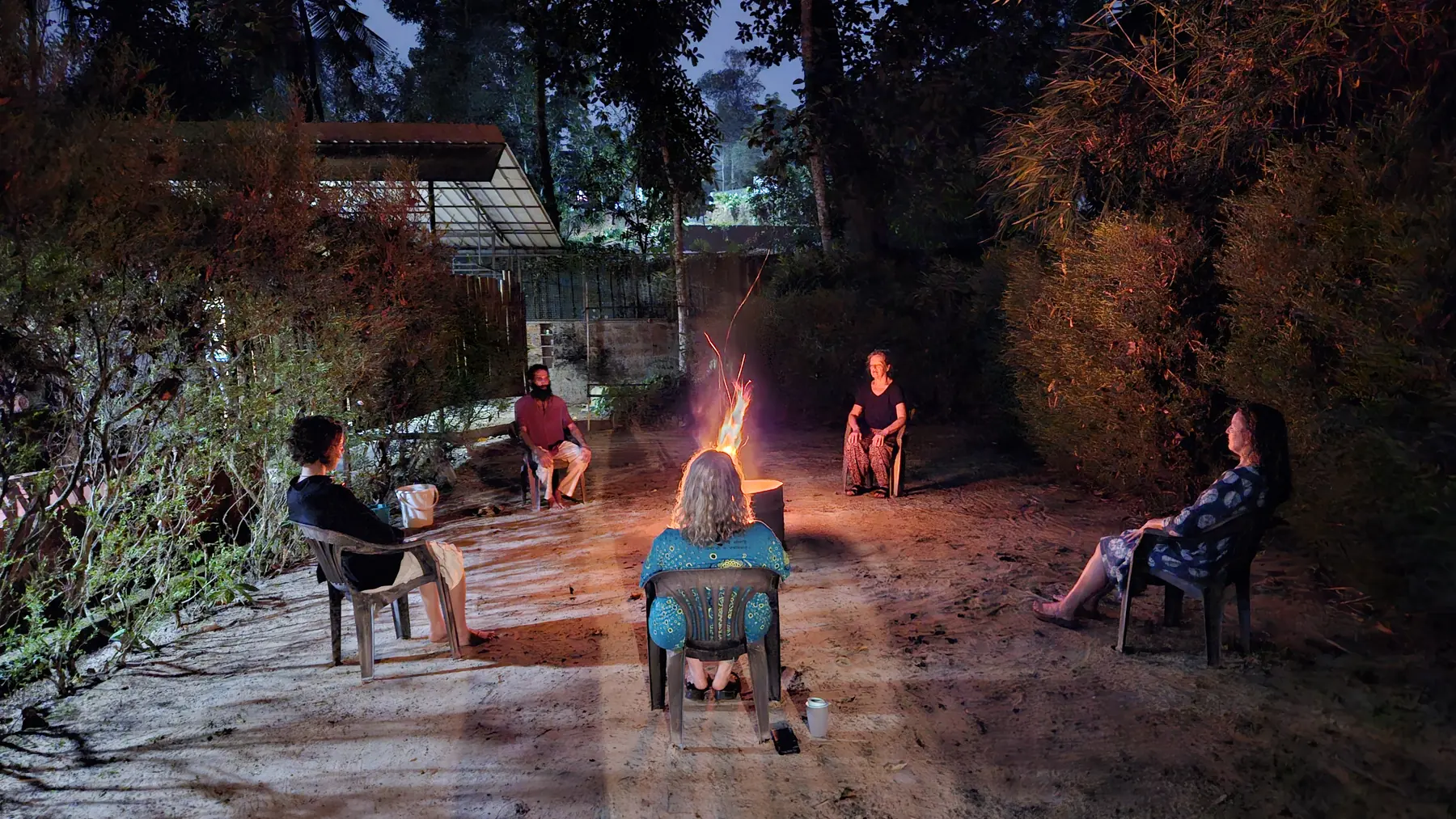
Group size shapes a retreat more than most people realise. In a small group, every voice can be heard, facilitators can notice each person, and trust builds faster. Very large groups offer more variety but less attention and less safety. Ask any organiser how many people will be in the room.
What a small group gives you
- Attention: facilitators notice when someone is struggling
- Trust: a group of sixteen can get to honesty faster than one of eighty
- Participation: everyone has time to speak
- Safety: easier to hold boundaries and respond to individual needs
What a larger group gives you
More variety of people, sometimes lower cost per person, and more anonymity, which some people prefer. The trade-off is less individual attention.
Why sixteen at Renovo Path
Sixteen is small enough for every voice to be heard and varied enough that you meet perspectives other than your own. Entry is by application, so the room is right for everyone in it.
Questions to ask an organiser
- How many participants will there be, and how many facilitators?
- Are there sub-groups or circles, and how big are they?
- How do you make sure quieter people are included?
- What happens if someone needs individual support?
Group chemistry
Who is in the room matters as much as how many. Retreats that read applications and talk to people beforehand are usually trying to build a group that works.
How size changes the experience hour by hour
In a group of sixteen, a circle can finish in under two hours and still give everyone time to speak. In a group of eighty, you would need sub-groups, and your time with a facilitator might be minutes. The difference shows up in meals as well, where small groups tend to mix and talk across the table.
How facilitators work with a small cohort
- They learn everyone's name and a little of their story by the end of day one
- They notice who is quiet and who is struggling, and check in privately
- They adjust the programme to the energy in the room
- They can offer individual support without disrupting the group
The trade-offs of being small
Small groups depend on who is in them, so selection matters, and a mismatch is more noticeable. There is also less anonymity: you will be known. For many people that is the point, and for those who prefer to blend in, a larger programme may feel more comfortable.
How to find out the real size
- Ask for the number of participants and the number of facilitators
- Ask how groups are divided for circles
- Ask whether the number includes staff or guests
- Ask what the maximum is, not just the average
Key takeaways
- Small groups give more attention, trust and safety
- Larger groups give variety and anonymity
- Sixteen is the Renovo Path cohort size, by application
- Group chemistry matters as much as numbers
What eight, sixteen and eighty feel like
With around eight people, a group can feel like a close circle of friends, and quieter members are noticed immediately, which some love and others find intense. With sixteen, there is enough variety to meet different views, yet every person still has time to speak and be heard in each session. With eighty, you are in a different kind of event: more like a workshop than a circle, with less individual attention and more freedom to stay anonymous.
None of these is wrong. The question is what you need. If you want to look closely at your own life with others, a number such as sixteen tends to be a good balance of safety and range.
How selection shapes a group
In a small group, who is in the room matters a great deal. If everyone has a similar level of readiness, the group can go deeper more quickly. If one person arrives in crisis, or with a very different purpose, the whole group is affected. That is part of why thoughtful organisers read applications and talk to people before accepting them.
Selection is not about status or being the right sort of person. It is about whether this retreat, now, is a good fit for you and for the others. A good organiser will tell you honestly if they think it is not, and may suggest something more suitable.
What participants can do to help a group work
A group is shaped by everyone in it. Small acts of care, repeated by many people, create the safety that makes honest work possible.
- Arrive on time and stay for the whole programme
- Listen as much as you speak
- Keep confidences
- Be honest about how you are, without taking over
- Look after yourself, and ask for what you need
Signs a retreat takes group size seriously
If these details are easy to find, it suggests the organisers have thought about the quality of the experience, and not only the numbers.
- It states the number of participants clearly
- It describes how many facilitators there are
- It explains how applicants are selected
- It describes how circles and sub-groups work
- It can tell you about people who found the retreat not suitable
Where the group continues after the retreat
In a small group, relationships often continue after the retreat. People exchange numbers, set up a group chat, or arrange a call a month later. A shared experience of honesty creates a bond that is different from ordinary friendship, and many people value it as a quiet source of support.
That is one reason follow-up and integration matter. A small cohort that meets again, even online, can help each member keep what they noticed. The size that made the retreat intimate also makes it possible to keep in touch.
The research behind group size
Studies of group dynamics have long shown that communication changes as groups grow. In small groups, each person speaks more, feels more responsible for the outcome and is more likely to be noticed if they withdraw. As groups grow, a few people tend to dominate while others fall silent. These are general patterns, and individual groups vary.
For a retreat that depends on honest speaking and listening, those patterns matter. A group of around a dozen to twenty seems to hold enough variety without losing intimacy, though there is no magic number. What matters is that the structure is designed for the size, and that the facilitators know how to hold it.
How the cohort model works
A cohort is a group that goes through an experience together, from start to finish, with the same people. The idea is common in education and in some professional programmes. Because the same people meet repeatedly, relationships deepen, and people become accountable to one another.
At Renovo Path, the cohort of sixteen attends the retreat together and then meets again in the six months of integration. That continuity means that the relationships built on the retreat can support the changes you want to make afterwards.
Being a good member of a small group
Small acts of reliability and care matter more in a small group than in a large one. They help everyone feel safe enough to be honest.
- Show up fully, including to the first and last sessions
- Keep your word: if you say you will do something, do it
- Respect confidentiality completely
- Be generous in listening, and cautious in advising
- Look after yourself, so that you are not a burden on the group
In summary
Group size shapes a retreat more than most brochures admit. Small groups tend to offer attention, trust and safety, at the cost of anonymity. Larger groups offer variety, at the cost of intimacy. Ask about numbers, selection and how groups are held, and choose what suits you. For the kind of honest, reflective work many people seek, a small, curated cohort is a good place to begin.
Common questions
Is a bigger retreat worse?
Not always, but it offers less individual attention. Choose what suits your needs.
Will I be pushed to speak?
Not at a well-run retreat. You choose how much to say.
What if I do not get along with someone?
It happens. Facilitators can help, and in a small, curated group it is less common.
Keep reading
If this sounds familiar, the Silent Gap explains the pattern, and the free Silent Gap guide gives you six questions to sit with. The next Renovo Path retreat is in Kochi, Kerala, on 24–27 December 2026, by application.